It’s Hard to be A Centrist

Charlotte Allen writes in the Wall Street Journal about the creation of ASMEA, the Association for the Study of the Middle East and Africa, as an counterweight alternative to the highly-politicized MESA, the Middle East Studies Association.

Towering scholar Bernard Lewis, described by Allen as the "eminence grise" of Islamic studies, is oddly enough the founder of both.  He was prompted to create this new body because MESA’s orientalist "political correctness" stifles true analysis, with all MESA activities - panels, papers, symposia - nowadays evaluated through rigid and cartoonish anti-Israel, anti-US filters.

What is disturbing and perhaps inevitable, as Allen observes, is that ASMEA may end up being hijacked by the opposite extreme.  Few university academics attended the inaugural meeting, perhaps for fear of being ostracized by "liberal" dogmatists that rule today campuses.  Military and defense specialists were prevalent, as were think tank researchers with hawkish "know your enemy" perspectives.  ASMEA Vice-chair Fouad Ajami and Professor Lewis have been vilified as "pro-Iraq-invasion" neo-cons.  ASMEA research may end up equally uncritical and trite as MESA’s, just from the opposite political spectrum. 

A week ago I wrote about a potentially similar development in the area of "pro-Israel" advocacy and lobbying, with JStreet seeking to rise as the flag-bearer of left-wing pro-peace DC US-Israel constituents to counteract their perception of AIPAC as the right-wing, anti-Arab DC US-Israel alliance, potentially leaving less platforms for moderate, centrist voices.

A disturbing pattern emerges making it harder for centrist voices to be heard and represented.  Mainstream moderates may make up the overwhelming majority in almost every area of discourse, but they are often overshadowed by the more passionate extremes, and their natural constituencies ready to embrace a black or white side of the spectrum.

Nuanced, balanced thinking has no natural constituency.

The same problem exists with the media.  News Corp’s FOX and Wall Street Journal are primarily platforms for conservative thinking - and you rarely if ever will see an op-ed contribution that challenges the inclinations of an orthodox readership.  NPR, CNN and The New York Times are primarily platforms for liberal (in the left-wing sense) thinking - and their editorials tend to be painfully unimaginative and caricatured.  (Alas, it also tends to be that the more "entertaining" shows and moderators have definite political slants - whether it’s the Daily Show with Jon Stewart, Colbert Report and Real Time with Bill Mahr for the left, or Rush Limbaugh and Bill O’Reilly for the right; centrist thinking is much more "boring").

Each media platform increasingly caters to audiences primed for "affirmation" rather than "information" - G’d forbid if some new data point challenges our assumptions. 

It is not just the institutions that are to blame, but all of us as products of these institutions. I am fascinated to notice how "news" developments are interpreted with such extraordinary bias by people who have formed an opinion. 

I remember during the Bush-Gore elections debacle how every development, decision or institution that favored George Bush (US Supreme Court, Florida Administration) was seen as correct by Bush supporters and as an afront to justice by Gore supporters.  Conversely, every development that favored Gore (Florida Supreme Court, Palm Beach or Dade County officials) was viewed as perfectly just and logical to Gore supporters and irredeemably flawed by Republicans.

Over the last two months I’ve also asked Clinton and Obama supporters to reflect on the bias of a news source or behavior from one party or the other.  Almost never does an Obama supporter admit that the Obama campaign may be fallible, and almost never does a Clinton supporter admit that their candidate may have done something wrong.

Lack of critical thinking and unbiased analysis presents a major challenge to society.

Share and Enjoy:
  • Digg
  • del.icio.us
  • Facebook
  • Google
  • Technorati
  • Live
  • YahooMyWeb
  • E-mail this story to a friend!
  • TwitThis

Passover Bondage In Modernity

My sister had a really interesting observation on the modern forms of bondage that we experience, relating to the spiritual aspects of Passover…

[Read more →]

Share and Enjoy:
  • Digg
  • del.icio.us
  • Facebook
  • Google
  • Technorati
  • Live
  • YahooMyWeb
  • E-mail this story to a friend!
  • TwitThis

Re-imagining ourselves in our fallen heroes

It is striking how often we resort to recasting our fallen leaders into molds of perfected humanity.  No matter their flaws, once assassinated, their death transforms them to immortal epic heroes.

In re-casting our fallen, we humans do not just pay tribute to their courage and compensate them for their lost years.  We also re-write history to make society seem more enlightened and history more bearable, if not downright inspirational. We re-write the fallen to have us seem more pious.

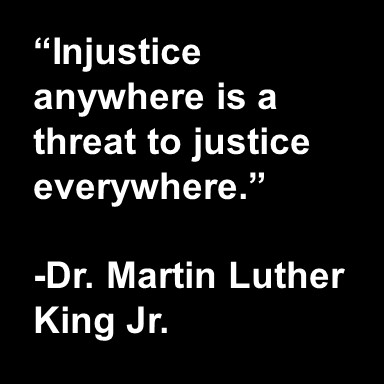
And so it is that Martin Luther King Jr., whose tragic passing we have just commemorated, has been re-written into a Disney prototype of a civil rights leader.  Whereas at 39 years of age this courageous human had failings like all of us, we cast out any weaknesses and remember only his “dream” of co-existence. We purge any problematic comments that some today would consider “unpatriotic.” And we conveniently forget that on the night that he was killed he was being called everything from a sell-out to a “menacing” instigator by leading newspapers and critics. According to modern lore, we fantasize that he embraced and was embraced by all of mainstream America, except by the one coward who shot him.

The phenomena of post-mortem-transformations is not uniquely American. Yitzhak Rabin is now revered by all Israelis as a unifying symbol, the soldier of peace who sacrificed his life for the cause. He should indeed be admired. But history seems to have conveniently swept aside that a large percentage of the Israeli population considered him a reckless traitor and the media was replete with condemnations and calls for his lynching in the weeks leading to his assassination.

Why is lionizing historic figures a problem? Don’t we all need to be inspired? Yes, but in transmogrifying the fallen into impossibly perfect figures to emulate, we make it very difficult to sufficiently appreciate and praise the mere good effort of the still-living leaders, not to mention our own responsibility to do our small part.

Why is re-casting history a problem? Because it turns deficient but illustrative history into unusable fairy-tale legend, and it leads us to draw distorted lessons from the past.

Gandhi, for example, was an exceptional leader, but he was not – as most people imagine him today – a heavenly pacifist.  Yes, his tools were non-violent, but his strategies were often not.  He was a brilliant strategist who knew he had the high moral ground and forced violence to be inflicted on his people in order to arouse moral rage around the world. He would ask his followers to walk and push their way through British soldier lines, knowing the soldiers would be forced to either give up control or hold the line through brutal force against defenseless white robed activists. He did not draw blood but caused others to draw it. Yes, one can admire Gandhi’s many positive contributions, but nobody is served by blind exultation of his “non-violent” path without critical examination of his means.

Contrast Gandhi’s approach to the still-living Dalai Lama, who has at least so far truly adopted a path of absolute non-violence, calling on Tibetan youth not to engage in violence or cause violence to be unleashed upon them, advising he will resign as spiritual and political leader if his call is not heeded. Gandhi would most likely have reacted differently. We have yet to see if the Dalai Lama’s path will change the status quo in Tibet, but if the path itself is the way, there is plenty to study and reflect in his life.

Only by analyzing the unvarnished nuances of human character can we accurately evaluate our past, our present, and our future.

Only by avoiding the tendency to create mythical messianic figures who must come to the rescue to rid us of human suffering can we own up to our shared responsibility as human beings, however imperfect and flawed we may be, to do a little of the leading ourselves.

Share and Enjoy:
  • Digg
  • del.icio.us
  • Facebook
  • Google
  • Technorati
  • Live
  • YahooMyWeb
  • E-mail this story to a friend!
  • TwitThis

Quote of the Week: "IF" by Rudyard Kipling

My friend Andy Komaroff shared this beautiful poem tonight at the rehearsal dinner for my wedding:

If you can keep your head when all about you

Are losing theirs and blaming it on you,

If you can trust yourself when all men doubt you

But make allowance for their doubting too,

If you can wait and not be tired by waiting,

Or being lied about, don’t deal in lies,

Or being hated, don’t give way to hating,

And yet don’t look too good, nor talk too wise:

If you can dream–and not make dreams your master,

If you can think–and not make thoughts your aim;

If you can meet with Triumph and Disaster

And treat those two impostors just the same;

If you can bear to hear the truth you’ve spoken

Twisted by knaves to make a trap for fools,

Or watch the things you gave your life to, broken,

And stoop and build ‘em up with worn-out tools:

If you can make one heap of all your winnings

And risk it all on one turn of pitch-and-toss,

And lose, and start again at your beginnings

And never breath a word about your loss;

If you can force your heart and nerve and sinew

To serve your turn long after they are gone,

And so hold on when there is nothing in you

Except the Will which says to them: "Hold on!"

If you can talk with crowds and keep your virtue,

Or walk with kings–nor lose the common touch,

If neither foes nor loving friends can hurt you;

If all men count with you, but none too much,

If you can fill the unforgiving minute

With sixty seconds’ worth of distance run,

Yours is the Earth and everything that’s in it,

And–which is more–you’ll be a Man, my son!

–Rudyard Kipling

Share and Enjoy:
  • Digg
  • del.icio.us
  • Facebook
  • Google
  • Technorati
  • Live
  • YahooMyWeb
  • E-mail this story to a friend!
  • TwitThis

Steve@Steve.com - A Challenge

A reader recently posted some very angry remarks relishing Armageddon for Israel and/from the Palestinian people…and talking about a rampage and killing and raping of children…

[Read more →]

Share and Enjoy:
  • Digg
  • del.icio.us
  • Facebook
  • Google
  • Technorati
  • Live
  • YahooMyWeb
  • E-mail this story to a friend!
  • TwitThis

Loving your Enemy AND Being the Captain of your Fate

I often carry around old newspapers whose op-eds or articles I hadn’t read.  Some times I may be dumb enough to bring one copy across half a dozen trips before getting to it, only to realize I was carrying dead weight.

Not just now, when I caught up with last week’s op-ed page from the New York Times, which included an extraordinary piece from Sarah Vowell and a good column from William Kristol.

From Vowell (whose piece goes far beyond the issues covered here), I read about pure Christian theology’s precepts, as taught by Jesus of Nazareth, to "Love your enemies, bless them that curse you, do good to them that hate you."  Too bad many followers intoxicated by organized religion’s quest for power forgot this precept.

But Martin Luther King Jr. did not.  He applied the Sermon on the Mount in his ‘loving your enemies’ sermon:

So this morning, as I look into your eyes and into the eyes of all of my brothers in Alabama and all over America and over the world, I say to you: ‘I love you. I would rather die than hate you.’

I am a bit embarrassed that I had never heard of this sermon, though I recently went through an experience that made me reflect about similar issues.

Back around late September and early October, when groups that opposed negotiations between Israel and Palestine for a two-state-solution or that did not understand or agree with OneVoice’s mission of mobilizing ordinary citizens to push for an agreement threatened some of our staff and performers, I clumped together attackers and critics, and was overcome with an intense sense of injustice and a hatred that I did not know I had in me.

Postponing the October 18th OneVoice Summit was a painful setback for the team and all our supporters, and it made me feel like I let down so many people and haunted me for a long time (still occasionally now).

Eventually our 18 month campaign not only overcame this setback, but continued to attract support, surpassing 650,000 signatories of the OneVoice Mandate to date, and validating its efforts when the Israeli, Palestinian and American Heads of State committed almost verbatim to the OneVoice Mandate.

But no less important was the internal growth that I experienced during that tough period, when I found myself taking a very wrong path of anger and resentment against those attacking or even just criticizing my team members.  Eventually I turned back from that dark alley into a path you can only see from the contrast of the darkness.  I felt what it was to hate, and I realized I had to reject it.  The experience had a lasting impression and impact on my thoughts about civic activism.

It is not enough to push for the peace process; it is not enough to awaken moderate voices, even though OneVoice recognizes that is tactically the most cost-effective choice to push the process along and highlight there is a partner on both sides.  As we gain momentum, we must also truly pursue peace with ALL.

Northern Ireland’s experience is instructive.  The movement also started with mainstream grassroots disaffected citizens - Mothers.  But eventually it broadened, and it enveloped and involved the leaders from the entrenched militant groups, which were at the table when the deals were struck.

The danger with excluding specific groups and branding them as extremist is that you don’t leave space for the people to evolve in their thought process, but cage them as the enemy, and leave them no other option but to struggle against your vision, which may include the "other", but may exclude some of your own.

Many who believe in a mission of a two state solution think that the only way to get there is to attack those who oppose it, but you end up creating a different type of enemy.  Somehow some proponents of peace with the other side have no qualms about fighting with their own.

The journey is as important as the destination.  Pursuing peace by demonizing those you consider to oppose it creates a different type of war.  Whether it is Israel’s far left which sometimes hates the Israeli right with as much intensity as the Israeli far right hates the Arabs (and the Israeli left), or whether it is someone from Fatah that hates Hamas, or whether it is a Jew who fears or resents a Muslim or vice-versa, all of the paths of hatred must be fought.

As painful as it is to the Israeli left, they need to engage the settlers in a dialogue and welcome them back to the mainstream.  This is of course very hard because the settlers are not aching to come in, to say the least, not to mention they want to keep the Israeli left out. 

As painful as it is to Palestinian seculars and intellectuals, and to the Fatah power base, they will need to find a way to attract Hamas supporters, many of whom were attracted to the grassroots authenticity of the Hamas movement’s struggle for liberation and turned off by corrupted officials entrenched in power.

And what do you do about those who ideologically cannot reconcile with peace? How do you deal with core Hamas leaders who believe Greater Palestine is an Islamic Waqf (a Trust from the Almighty) which cannot be negotiated away? How do you relate to settlers who feel Greater Israel is a grant to the Jewish people (a Trust from the Almighty), one which cannot be negotiated away?

THESE are the instances where you most must fight all impulses to hate.  You must hold on to your principle, and try to reason.  But where your reason does not permeate into theirs, you must continue inviting them to come in to your tent one day, and offer that they can reconcile their beliefs with the reality of two peoples destined to co-exist by keeping their spiritual absolutism in their hearts, respectfully, and not forgetting their religious precepts which also require respect and love to other human beings.

It is a very hard thing to achieve an approach of unbending love and respect towards all, and probably only saints like MLK Jr. or Gandhi truly achieve such pure empathy. 

After all, when you perceive an injustice to be done, you feel justified, almost morally-bound, to resent the person that commits the injustice.  If the injustice is great, you may feel an impulse to hate the aggressor.  But I guess you must at least TRY to catch that impulse and fight it.  It does NOT mean you don’t fight the injustice; it means you try to get the transgressor to fight it too.  And this requires a lot of love.

Otherwise, with so much animosity and pain and fear and suspicions and suffering, it will eat you and turn you into that which you most want to fight.


William Kristol writes about what makes John McCain different from the other Republicans running for their party’s nomination, including being "the not-so-modern type [that is shaped by political consultants, being]…rigid, self-righteous, and moralizing, but (or rather and) manly, courageous, and principled."  He tells how McCain memorized as a child, and recited to Kristol on a patchy cell phone call, this extraordinary poem about conviction and courage of the soul:

Out of the night that covers me,
Black as the pit from pole to pole,
I thank whatever gods may be
For my unconquerable soul.

In the fell clutch of circumstance
I have not winced nor cried aloud
Under the bludgeonings of chance
My head is bloody, but unbow’d

Beyond this place of wrath and tears
Looms but the horror of the shade,
And yet the menace of the years
Finds, and shall find me, unafraid.

It matters not how strait the gate,
How charged with punishments the scroll,
I am the master of my fate:
I am the captain of my soul.

-William Ernest Henley, Invictus (1875), as quoted by McCain and told by Kristol, who surmises McCain must have recited this more than once during his captivity as a prisoner of war. 

What is remarkable about McCain is that for the most part when I hear him (with the notable exception of his California debate against Romney), he seems to be the captain of his soul and to fight to uphold principles he holds dear, including some times supporting a tough military course without hating his enemy and without doing things out of spite.  He too lets people like Romney get the best of him.  And it is starkly unattractive.  But for the most part, he rises above petty politics.  He acts out of nobility and puts US interests ahead of himself or his campaign.

Share and Enjoy:
  • Digg
  • del.icio.us
  • Facebook
  • Google
  • Technorati
  • Live
  • YahooMyWeb
  • E-mail this story to a friend!
  • TwitThis

Our Brains Re-Wired for Constant Input

A revolution inside the human brain is taking place far beyond our capacity to understand.

What we call "A.D.D." or attention-deficit-disorder will become the norm rather than the exception, if it hasn’t already.

Our brains used to de-construct and decompress during leisurely walks between work and home, but if you see people walking nowadays, odds are they are speaking on a cell phone.  No time to waste: we crave more input.

Email processing makes us "efficient" (though it can also invade our management time) but changes the very way we organize ourselves and communicate.  The constant feedback mechanism turns us into creatures desiring a flow of data and messages.

Instant-messaging, social network platforms, the way we seek news over the internet, and email reminders, are all transforming the way we think, process, relate to other human beings, and relate to our brains.

The impact of this constant-feedback/short-span model of communications is already felt in entertainment platforms, where Youtube’s short-clips are becoming more the rage than long-format movies. 

When we design a video presentation for OneVoice or PeaceWorks, of course we forget about the 1 hour or 20 minute pieces, but now even the 5 minute piece which was acceptable a few years ago is a total eternity.  You have 1 minute max to convey your message, no matter how deep or complex.  After that you’ve lost your audience.

I will not be surprised if the next generation of human beings is radically different in the way people relate to one another.  We have no idea what we are going to become.

And I have a fleeting feeling (as feelings and thoughts increasingly are) that it is not going to be pretty.

Share and Enjoy:
  • Digg
  • del.icio.us
  • Facebook
  • Google
  • Technorati
  • Live
  • YahooMyWeb
  • E-mail this story to a friend!
  • TwitThis

Rites of Passage in NYC

It’s funny how you tell yourself you will avoid some of the rites of passage that people go through from living in NYC, thinking you of all people will be impervious to them, and then, before you know it, you realize you have succumbed…

When you first move to NYC, one of the first things you notice is that people walking on the streets don’t look at or greet each other, let alone smile. 

You think to yourself, I will look at people’s eyes, I will say hello, I will make them all smile, I will single-handedly transform NYC into the friendliest of cities. 

And you experiment for the first year or two, even if people think you are crazy - or can tell you are just new.

Then somewhere along the way, it just happens, gradually, till you stop staring into the walker-by’s eyes with a smile.  It’s not that you are rude or mean.  You just go about your business.

You get to NYC thinking you will always have time for everyone, you will always be polite and open doors and be relaxed.  But 15 years later, you are always in a rush, and you sometimes catch yourself in your own bubble.


Then there is NY REAL ESTATE.  Reading the Real Estate Section in the NY Times is a sport in NYC, and everyone talks about it.  Yet you think you will avoid it altogether and won’t be bothered with such obsessions. 

Alas, one day you find yourself reading the Real Estate section, following the market, wondering when it will adjust, becoming an "expert" in square footage, valuations, and all sorts of trends and considerations.  Eventually you are drawn like a magnet to any new piece of input on the real estate.


And then there is the Wall Street Journal, though more than a NY thing, this is more a rite of passage from youth I guess (and regret).  When I was in college, and even during law school, reading the Wall Street Journal was such a bore, while the NYT was so fascinating.  WSJ was numbers.  NYT was people.  WSJ was dry.  NYT was passion. 

I don’t know if it’s that the NYT has gone so down editorially and the WSJ has improved so much, or that as you get older your way of thinking changes, or that the WSJ is more sophisticated or complex, but something about the NYT increasingly bores me, and I find the WSJ far more stimulating…

Share and Enjoy:
  • Digg
  • del.icio.us
  • Facebook
  • Google
  • Technorati
  • Live
  • YahooMyWeb
  • E-mail this story to a friend!
  • TwitThis

Some Lessons from A Setback

What are some of the lessons from the painful postponement of the OneVoice Summit?

· to stand strong on our principles, and not let anyone define who we are;

· to anticipate threats and challenges and plan better to prevent anyone from derailing non-violent actions that are consistent with the Will of the People;

· to brief all constituents directly, even those who may be suspicious of or threatened by OneVoice, to clarify the sincerity of purpose and nobility of the goals of the Movement;

· to not be swallowed by hatred or contempt, and to not attack anyone as an individual, but rather to point out that the ideology of absolutism must be overcome;

· to be exceptionally clear and transparent about all we say and do;

· to work more strategically

· to avoid centralization of authority;

· to empower youth leaders;

· to strengthen alliances and emphasize partnerships;

· to demand the highest standards of transparency and professionalism from all of us;

· to never lose sight of why we are doing what we are doing.

Share and Enjoy:
  • Digg
  • del.icio.us
  • Facebook
  • Google
  • Technorati
  • Live
  • YahooMyWeb
  • E-mail this story to a friend!
  • TwitThis

Haunted

More and more
The darkness haunts me
The memory of before I was
The stone sinking deeper into the sea
The inevitability of evil
Will it never change?

More and more
The sleepless nights
The failure to bring light
The stone sinks deeper, a rope attached around:
A noose around humanity

More and more
The breathing gets harder
The tears are dry, crude salt
A grayer soul has seen the tombs
A frayed body finds its limitations

Maybe he was right that knowledge burns and hardens the heart.
Maybe he was right that only Generals can set the tone.
Would a final offering, foregoing life’s sustenance itself, awaken?

Share and Enjoy:
  • Digg
  • del.icio.us
  • Facebook
  • Google
  • Technorati
  • Live
  • YahooMyWeb
  • E-mail this story to a friend!
  • TwitThis