I received a copy of The Bordeaux Kitchen: An Immersion into French Food and Wine, written by my friend Tania Teschke, and I’m excited to dig in. Flipping through the pages transports you to France, and the recipes look delicious!


I received a copy of The Bordeaux Kitchen: An Immersion into French Food and Wine, written by my friend Tania Teschke, and I’m excited to dig in. Flipping through the pages transports you to France, and the recipes look delicious!
‘Spiderman’ granted French citizenship after rescuing child from Paris balcony
Video of the rescue showed 22-year-old Mamoudou Gassama climbing up four floors of the apartment building in just seconds to rescue the child, to cheers from onlookers. By the time Parisian emergency services arrived at the building, he had already pulled the child to safety.
Here’s a story from The New York Times that I thought you’d find interesting. Gazans and Israel could have made peace before. Now, demographic and ecosystem issues add urgency.

By Thomas L. Friedman
Princess Diana once famously observed that there were three people in her marriage, “so it was a bit crowded.” The same is true of Israelis and Palestinians. The third person in their marriage is Mother Nature — and she’ll batter both of them if they do not come to their senses.
Let’s start with Hamas, the Palestinian Islamist organization that rules the Gaza Strip. If there were an anti-Nobel Peace Prize — that is, the Nobel Prize for Cynicism and Reckless Disregard for One’s Own People in Pursuit of a Political Fantasy — it would surely be conferred on Hamas, which just facilitated the tragic and wasted deaths of roughly 60 Gazans by encouraging their march, some with arms, on the Israeli border fence in pursuit of a “return” to their ancestral homes in what is now Israel. [Read more →]
BY DAHLIA SCHEINDLIN
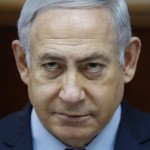
The more Israel’s prime minister escalates tensions, the more his popularity grows.
In 2015, Benjamin Netanyahu was elected to a fourth term as prime minister of Israel. Within months, pundits began speculating when his government would fall. So far, the answer has been never.
Netanyahu has faced trouble, including ministerial resignations and police investigations, since shortly after the 2015 elections. Over the last year, the arguments for his imminent demise gathered steam: In February, police recommended that the attorney general indict him for corruption based on investigations in four different cases. The situation in the Gaza Strip festered; the Temple Mount nearly exploded; and the news warned almost nightly of a war with Hezbollah in Lebanon. There has been no progress on Israeli-Palestinian peace since negotiations collapsed in 2014. And at home, a wave of rage against economic hardship and massive social inequality erupted in 2011, when Netanyahu was prime minister as well, yet there has been no relief for the exorbitant cost of living in the seven years since.
Why then is Bibi more beloved than ever? In 2016, Netanyahu’s Likud party polled at an average of 25.7 seats in the Knesset, Israel’s parliament, lower than the 30 seats it won in 2015 but still ahead of all rivals. Each year, the average has crept upward. When the police recommended indicting Netanyahu, his party’s numbers rose. When U.S. President Donald Trump withdrew from the Iran nuclear deal on May 8, polls gave him the highest numbers in a decade, 35 or 36 seats; one survey was even rumored to predict 42. [Read more →]
By Leonard Mlodinow
Ten years ago, when my son Nicolai was 11, his doctor wanted to put him on medication for attention deficit hyperactivity disorder. “It would make him less wild,” I explained to my mother, who was then 85. “It would slow him down a bit.”
My mother grumbled. “Look around you,” she said in Yiddish. “Look how fast the world is changing. He doesn’t need to slow down. You need to speed up.”
It was a surprising recommendation from someone who had never learned to use a microwave. But recent research suggests she had a point: Some people with A.D.H.D. may be naturally suited to our turbocharged world. [Read more →]

By Fareed Zakaria, Thursday, March 29, 2018
By way of explanation for some of President Trump’s bizarre foreign policy moves, we are often told that he is “unconventional” and that this could well be an asset. It’s certainly true that he doesn’t follow standard operating procedure on almost anything, from getting daily intelligence briefings to staffing the State Department. But his most striking departure from previous presidents has been in his rhetoric. American presidents have tended to weigh their words carefully, believing that they must preserve the credibility of the world’s leading power.
And then there is Trump, for whom words are weightless. During the campaign, he excoriated Saudi Arabia as a country that “want[s] women as slaves and to kill gays,” only to make his first presidential trip abroad to the kingdom and warmly embrace its rulers. He said NATO was obsolete and then affirmed the opposite. China was a currency manipulator that was “raping” the United States, until it wasn’t. [Read more →]
It’s rare to see these well-documented facts so plainly stated on mainstream TV.
Worth your 3 minutes:
On Saturday night, Darkeu screened this video to tens of thousands of Israelis, gathered in Rabin Square, who watched in stunned silence. Twenty-two years ago to the day, at that very spot, Yitzhak Rabin was murdered after months of the sort of incitement, hate and violence that is once again rising in Israel. On Saturday, Israel’s moderate majority gathered in the square, united in determination to never again let extremists determine their country’s future.

It never crossed my mind that an idea that began to take shape years ago to heal divisions among nations would be as urgently needed to bridge divides within our own country.
Today, I am proud to announce how Empatico will help address the major challenges that our nation and world face in terms of growing alienation, hatred, and the inability to listen to one another.
Fifteen years ago, as I was traveling across the Middle East and the world to build a grassroots Movement to amplify the voice of Israeli and Palestinian moderates, I was struck by a concern shared by everyone with whom I spoke. Each side felt that their people was misunderstood and mischaracterized. Tensions were at an all-time high, but it was clear that each group’s desire was similar: Muslim, Christian or Jew, Arab or Israeli, secular or religious, they wanted to tell their stories and where they were coming from. They wanted to be treated with dignity and respect. [Read more →]