I received a copy of The Bordeaux Kitchen: An Immersion into French Food and Wine, written by my friend Tania Teschke, and I’m excited to dig in. Flipping through the pages transports you to France, and the recipes look delicious!


I received a copy of The Bordeaux Kitchen: An Immersion into French Food and Wine, written by my friend Tania Teschke, and I’m excited to dig in. Flipping through the pages transports you to France, and the recipes look delicious!
Here’s a story from The New York Times that I thought you’d find interesting. Gazans and Israel could have made peace before. Now, demographic and ecosystem issues add urgency.

By Thomas L. Friedman
Princess Diana once famously observed that there were three people in her marriage, “so it was a bit crowded.” The same is true of Israelis and Palestinians. The third person in their marriage is Mother Nature — and she’ll batter both of them if they do not come to their senses.
Let’s start with Hamas, the Palestinian Islamist organization that rules the Gaza Strip. If there were an anti-Nobel Peace Prize — that is, the Nobel Prize for Cynicism and Reckless Disregard for One’s Own People in Pursuit of a Political Fantasy — it would surely be conferred on Hamas, which just facilitated the tragic and wasted deaths of roughly 60 Gazans by encouraging their march, some with arms, on the Israeli border fence in pursuit of a “return” to their ancestral homes in what is now Israel. [Read more →]
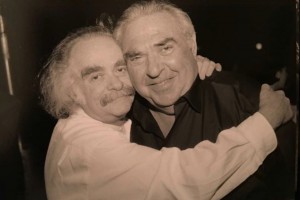
Today was a sad day. We gathered in Mexico to mourn the passing of my uncle, Tio Muni, my dad’s younger cousin. Along with the rest of my family in Mexico, Tio Muni (who looked like Albert Einstein and is hugging my dad in the picture below) welcomed my dad after the war. My dad was 17 and Muni was 9, yet he loved playing with his cousins as if he too were a little kid, after he was robbed of a childhood because of the Holocaust. I remember Tio Muni would share how my dad would organize games for his cousins, and how it was clear that my dad was having as much fun as they were. It was in Mexico that my dad finally had a “childhood.” My dad would also teach them about classical music as he developed a love for learning and enjoying life, and would give them each a few cents if they could divine the composer of a particular song. Now Tio Muni joins my dad in heaven, and I can only imagine them hugging, singing and whistling a tune together as they divine each other’s choices. Our world has lost two teddy bears. May our heaven rejoice with their souls and sweetness.
By Leonard Mlodinow
Ten years ago, when my son Nicolai was 11, his doctor wanted to put him on medication for attention deficit hyperactivity disorder. “It would make him less wild,” I explained to my mother, who was then 85. “It would slow him down a bit.”
My mother grumbled. “Look around you,” she said in Yiddish. “Look how fast the world is changing. He doesn’t need to slow down. You need to speed up.”
It was a surprising recommendation from someone who had never learned to use a microwave. But recent research suggests she had a point: Some people with A.D.H.D. may be naturally suited to our turbocharged world. [Read more →]
On Saturday night, Darkeu screened this video to tens of thousands of Israelis, gathered in Rabin Square, who watched in stunned silence. Twenty-two years ago to the day, at that very spot, Yitzhak Rabin was murdered after months of the sort of incitement, hate and violence that is once again rising in Israel. On Saturday, Israel’s moderate majority gathered in the square, united in determination to never again let extremists determine their country’s future.
Sunday Review, The New York Times
By Adam Grant
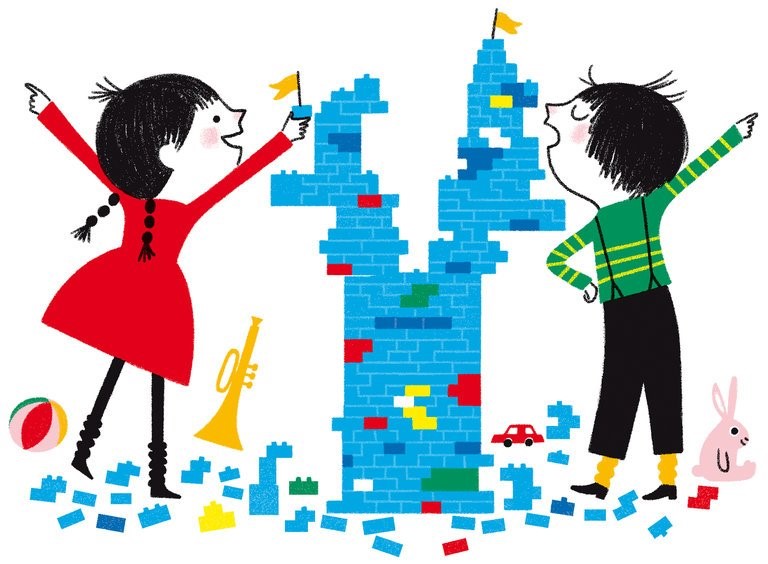
I’m sharing an excellent piece by Adam Grant about the importance of teaching children how to have healthy disagreements, rather than shielding them from any discord. It is a salient point for child rearing, but also for creating a company culture where we prize healthy and hearty debate and learn to listen and think critically. At KIND, we strive to create a culture in which people are comfortable disagreeing with me – and with each other. We know that these debates are never personal, and they often help us arrive on the best solution for the team and company.
When Wilbur and Orville Wright finished their flight at Kitty Hawk, Americans celebrated the brotherly bond. The brothers had grown up playing together, they had been in the newspaper business together, they had built an airplane together. They even said they “thought together.” [Read more →]

It never crossed my mind that an idea that began to take shape years ago to heal divisions among nations would be as urgently needed to bridge divides within our own country.
Today, I am proud to announce how Empatico will help address the major challenges that our nation and world face in terms of growing alienation, hatred, and the inability to listen to one another.
Fifteen years ago, as I was traveling across the Middle East and the world to build a grassroots Movement to amplify the voice of Israeli and Palestinian moderates, I was struck by a concern shared by everyone with whom I spoke. Each side felt that their people was misunderstood and mischaracterized. Tensions were at an all-time high, but it was clear that each group’s desire was similar: Muslim, Christian or Jew, Arab or Israeli, secular or religious, they wanted to tell their stories and where they were coming from. They wanted to be treated with dignity and respect. [Read more →]